
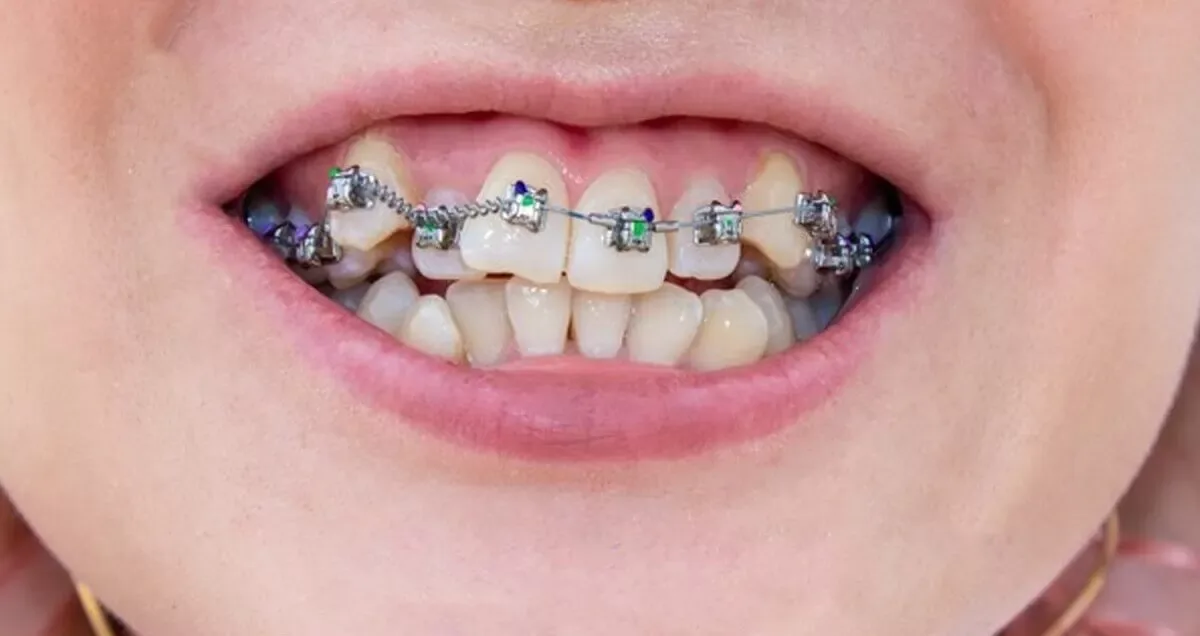
Crowded teeth occur when teeth do not have enough space to align properly in the jaw. As a result, teeth may overlap, rotate, or erupt in a misaligned position. Dental crowding should not be considered only an aesthetic concern. It may also make oral hygiene more difficult and may be associated with bite problems in some patients. The American Association of Orthodontists explains that overcrowding occurs when the jaw lacks enough space for all adult teeth, causing them to become crooked or overlap.
What Is Dental Crowding?
Dental crowding is a condition in which the teeth are positioned too close together, rotated, or overlapping. It may affect the upper jaw, lower jaw, or both.
In some patients, crowding may be mild. In others, it may be severe enough to affect tooth cleaning, chewing function, and bite alignment. For this reason, the degree and cause of crowding should be evaluated by an orthodontist.
Can Genetics Cause Crowded Teeth?
Yes. Genetics is one of the most common factors associated with dental crowding. Jaw size, tooth size, and facial development are strongly influenced by inherited traits.
For example, if a person has a narrow jaw and relatively large teeth, there may not be enough room for the teeth to align properly. MedlinePlus notes that malocclusion is often hereditary and may result from a mismatch between jaw size and tooth size, which can lead to tooth overcrowding.
Can a Narrow Jaw Cause Dental Crowding?
A narrow jaw may reduce the amount of space available for permanent teeth. When the dental arch is not wide enough, teeth may have difficulty erupting in their correct positions.
This may be especially noticeable in children with upper jaw narrowing. It can affect tooth eruption, bite relationship, and the available space inside the mouth. Over time, this may contribute to more visible crowding or bite problems.
Can Early Loss of Baby Teeth Cause Crowding?
Baby teeth act as natural space maintainers for permanent teeth. If a baby tooth is lost too early, neighboring teeth may drift into the empty space. This can reduce the space needed for the permanent tooth to erupt properly.
When a permanent tooth cannot find enough room, it may erupt rotated, crowded, or in an incorrect position. Therefore, early baby tooth loss should not be ignored in children.
Can Delayed Loss of Baby Teeth Also Cause Problems?
Yes. If baby teeth do not fall out at the expected time, they may interfere with the eruption path of permanent teeth. When a permanent tooth begins to erupt while the baby tooth is still present, the permanent tooth may come in from a different position.
This is why dental development should be monitored during childhood. Early evaluation may help identify potential alignment problems before they become more complex.
Can Thumb Sucking and Oral Habits Cause Crowding?
Long-term habits such as thumb sucking, prolonged pacifier use, tongue thrusting, mouth breathing, or nail biting may affect tooth and jaw development.
If these habits continue during growth, they may contribute to open bite, upper jaw narrowing, forward movement of the front teeth, or bite irregularities. Mayo Clinic’s discussion of early orthodontic evaluation also highlights habits such as finger sucking, thumb sucking, and tooth grinding as issues that may need to be addressed during childhood.
Improper Eruption of Permanent Teeth
In some cases, permanent teeth may not erupt in the correct direction. A tooth that erupts at an improper angle may push against neighboring teeth or create a crowded appearance.
This may be seen especially in canine teeth, premolars, or front teeth. Impacted teeth, missing teeth, or extra teeth may also affect dental alignment. For this reason, panoramic X-rays and orthodontic examination can be helpful in evaluating tooth development.
Is Dental Crowding Only Seen in Children?
No. Dental crowding can be seen in both children and adults. Mild crowding that begins in childhood may become more noticeable over time. In adults, natural tooth movement, tooth loss, gum problems, or not wearing retainers after orthodontic treatment may contribute to crowding.
Orthodontic evaluation is therefore not only for children. Adults may also be suitable candidates for braces, clear aligners, or other orthodontic treatment options.
What Problems Can Crowded Teeth Cause?
Crowded teeth may make brushing and flossing more difficult. When teeth overlap, plaque can accumulate more easily in tight spaces. This may increase the risk of cavities, gum sensitivity, and bad breath.
Crowding may also be associated with bite problems, uneven chewing forces, tooth wear, and aesthetic concerns. Cleveland Clinic states that untreated malocclusion may contribute to tooth erosion, gum disease, and other oral health problems.
Can Dental Crowding Be Prevented?
Not every case of dental crowding can be prevented. Genetic factors, jaw structure, and tooth size are not fully controllable. However, regular dental and orthodontic check-ups during childhood may help detect some problems early.
The American Association of Orthodontists recommends that children have their first orthodontic check-up no later than age 7. At this age, the combination of baby and permanent teeth allows the orthodontist to identify developing orthodontic problems early.
How Is Dental Crowding Treated?
The treatment of dental crowding depends on the patient’s age, tooth alignment, jaw structure, and bite relationship. In some patients, braces may be preferred. In others, clear aligner treatment may be suitable.
In children, growth is still continuing, so early orthodontic approaches or appliances may be considered when needed. In adults, the treatment plan is created according to the existing tooth and jaw structure.
Crowded Teeth Should Not Be Ignored
Dental crowding can affect not only smile aesthetics but also oral hygiene, chewing balance, and long-term oral health. For this reason, the cause and severity of crowding should be evaluated by an orthodontist.
Early check-ups may help determine the right timing for treatment. People who notice crowded, overlapping, or misaligned teeth should consider a detailed orthodontic examination.